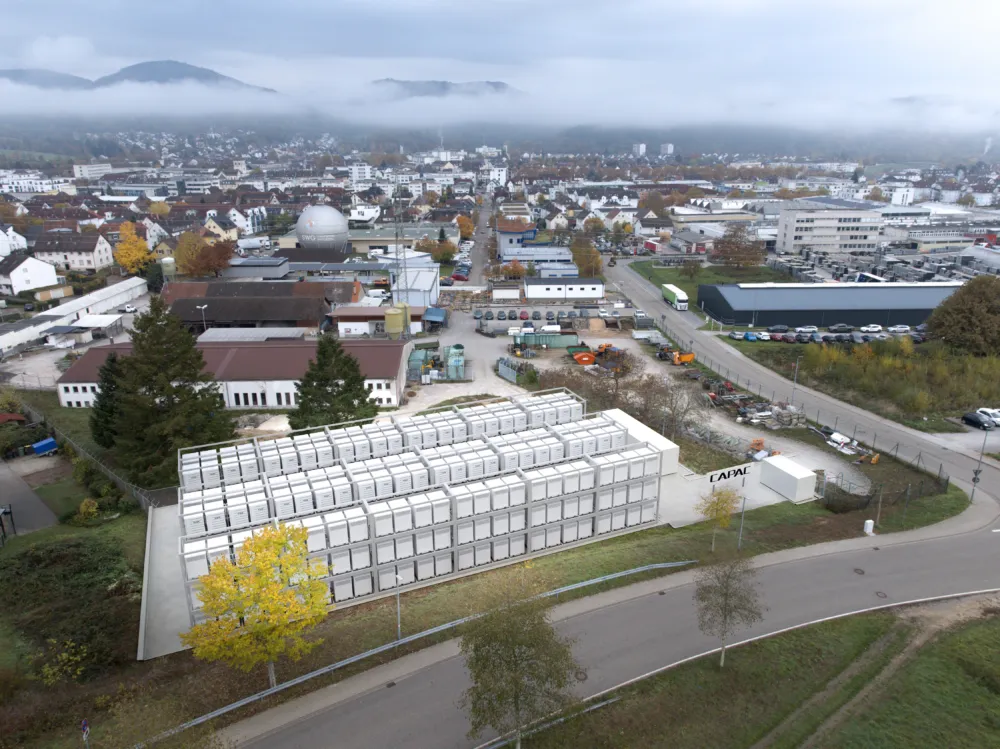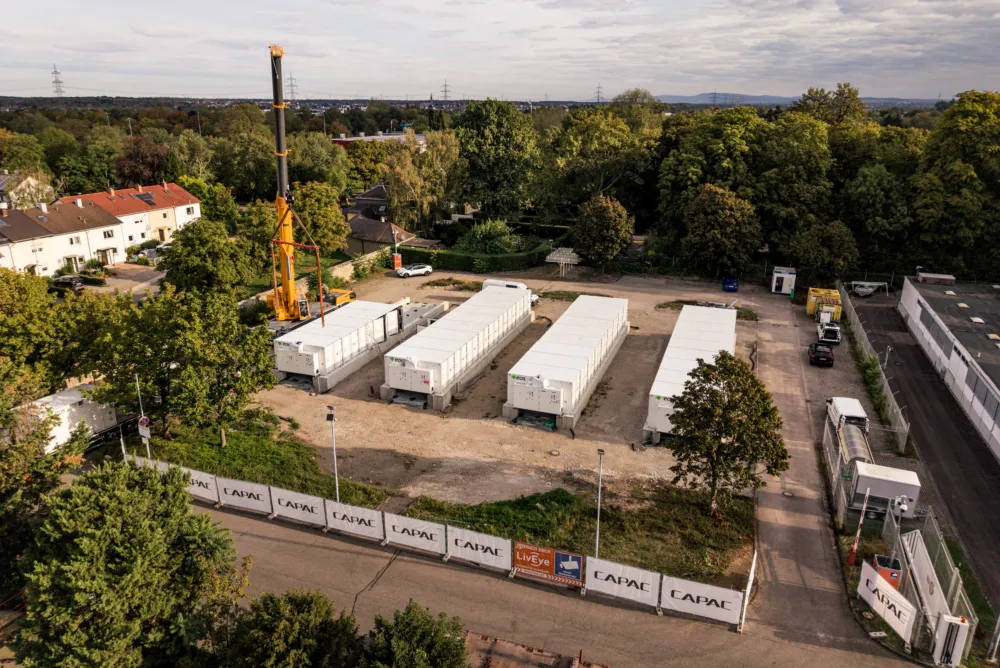
At the Triwo Technopark in Bruchsal, CAPAC’s battery storage project is now visible on site: all 36 battery containers have been delivered and placed on their foundations. The plant will have a power of 5 MW and a capacity of 22 MWh, which equals a storage duration of just over four hours. It uses zinc batteries from the US manufacturer Eos Energy Enterprises and is the first large-scale storage project in Europe based on this technology. Commissioning start is planned by the end of 2026.
From concept to construction site
CAPAC presented the project in June 2026, together with an exclusive framework agreement with Eos for the DACH region. The agreement runs until the end of 2031 and covers a volume of up to 2 GWh. Bruchsal is the first plant to be built under this partnership. CAPAC developed the project itself and invests in it. The company is responsible for site assessment, technical planning, grid connection and, later, operation of the plant.
CAPAC, formerly known as Nala Energy, develops, builds and operates zinc-based large-scale storage systems in Germany, Austria and Switzerland, acting as system integrator and general contractor. With Bruchsal, the technology leaves the presentation stage and becomes an operating asset on the German grid.
Location and partners
The plant is being built in the Triwo Technopark, an industrial and commercial area in Bruchsal, a town of about 46,000 inhabitants in Baden-Württemberg. Triwo AG develops sites and infrastructure and brings its experience as a site partner to the project. From Triwo’s perspective, battery storage is becoming an important building block for marketing commercial land and for integrating renewable energy.
Stadtwerke Bruchsal, the regional utility for electricity, gas and water, accompanies the project. As the municipal utility is also expanding its district heating network, it wants to help shape the local energy transition and contribute solutions that stabilize the energy system. The utility evaluates the new technology against three criteria: it has to convince technically, in terms of safety, and economically. JP Holding, a private investment company focused on large-scale battery storage, energy infrastructure and cleantech, takes part as a co-investor.
Zinc instead of lithium
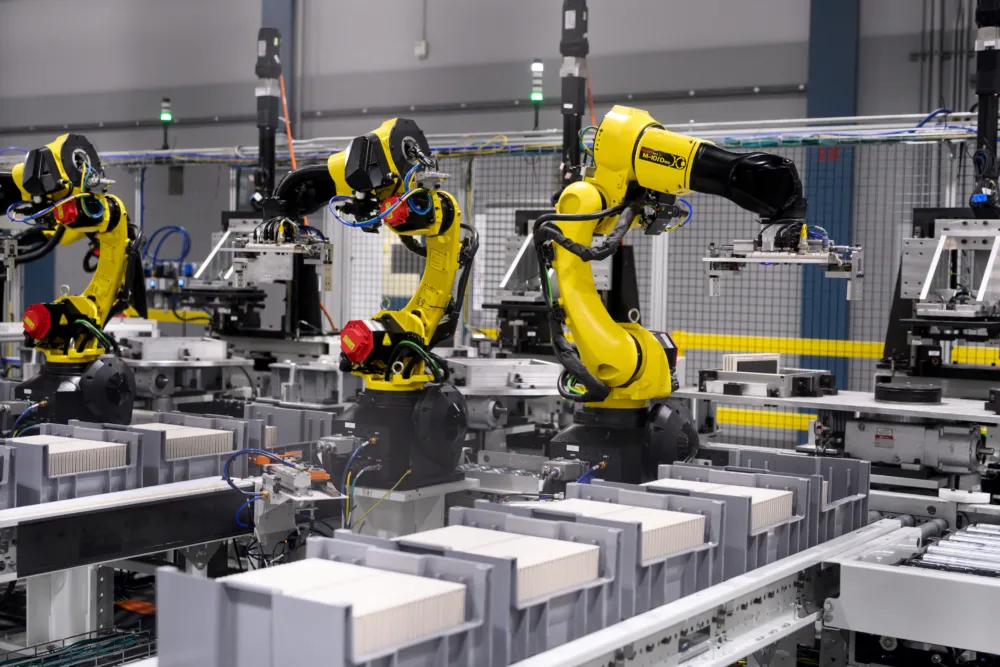
The battery modules come from Eos and are manufactured in Pittsburgh, Pennsylvania. The water-based zinc technology works without lithium, cobalt and nickel and is designed for stationary applications with frequent charging and discharging.
The electrolyte is non-flammable and no complex cooling or air conditioning is required. The expected service life is more than 25 years, with cumulative degradation of no more than 3.6 percent over that period. The technology is built for safety, long life and economics rather than maximum energy density, which suits multi-hour stationary storage.
Marketing as a stand-alone infrastructure asset
The plant will operate as a stand-alone infrastructure asset. Revenues are to come from trading on the day-ahead and intraday markets, from flexibility services and from system services such as balancing power and instantaneous reserve. Participation in the future capacity market is also planned. Fully automated, AI-supported algorithms handle trading and optimization.
What comes next
After the containers, the focus in Bruchsal shifts to completing the grid connection and commissioning. Further projects are already in the pipeline.