Products
Eos Cube
Plug & play battery storage in a container. The Eos Cube arrives factory-assembled, with battery modules, electrical components and battery management already integrated, ready to connect on site. Scale from a single unit to a multi-MWh plant.
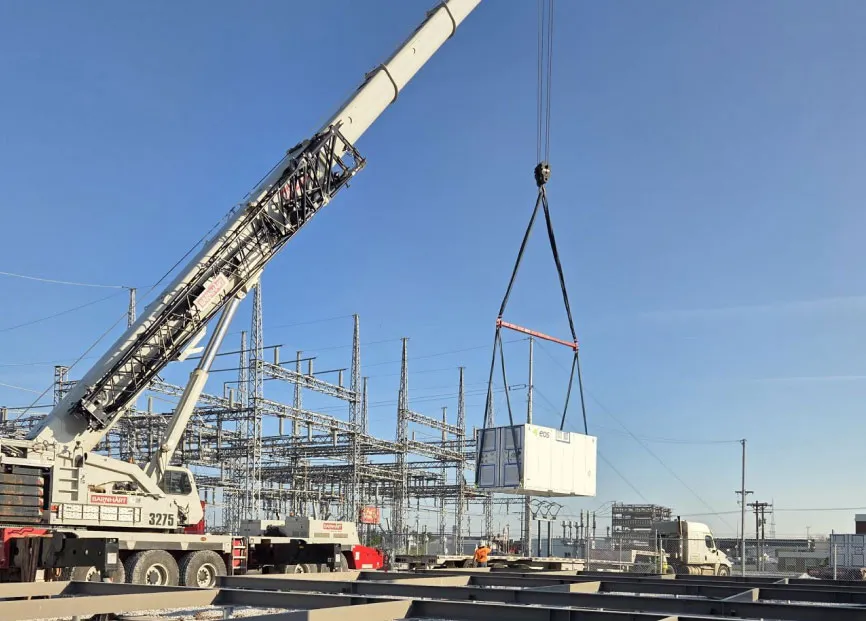
Design concept
Each Cube is a standard outdoor-rated container holding 672 Eos Z3 battery modules. Everything is installed and tested in the factory, so on-site work is limited to foundations and connection. Projects scale simply by adding further Cubes in parallel, from a single unit for an industrial site to multi-MWh utility plants.
- Pre-assembled and factory-tested, delivered ready to connect
- Outdoor-rated container, no building or enclosure required
- Passive standard ventilation, no air conditioning or pumps
- Modules shipped at zero charge, so no hazardous goods classification is required
- Modular scaling by adding Cubes in parallel
In short
Fast to install, simple to expand, low effort on site.
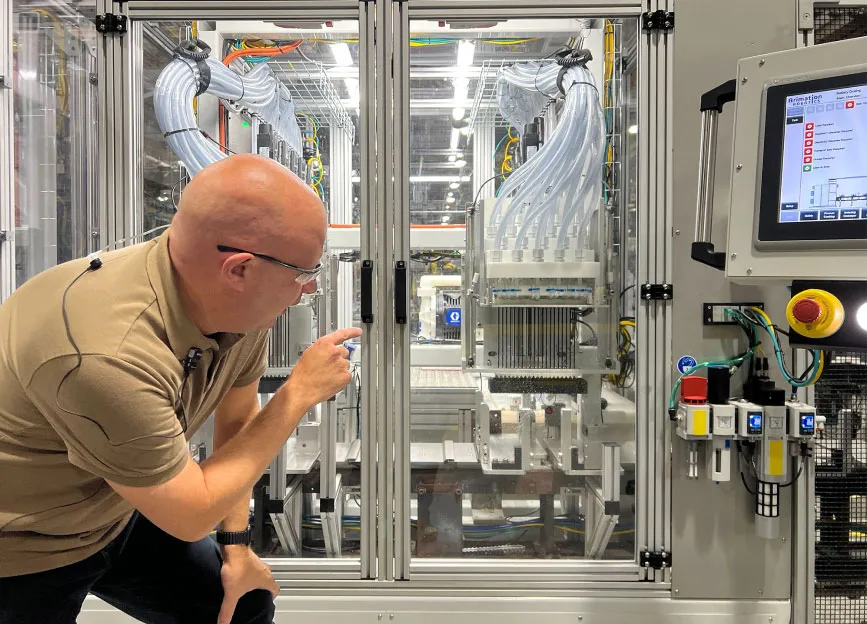
Zinc technology inside
The simplicity of the Cube is a direct result of its chemistry. The Eos Z3 modules use a water-based zinc halide electrolyte that cannot burn and needs no thermal management. Many of the components a lithium-ion container requires, such as cooling, heating and complex fire suppression, are therefore unnecessary.
Operating characteristics:
- Non-flammable: water-based electrolyte, no risk of thermal runaway
- Temperature-stable: operates from −20 °C to +50 °C without heating or cooling
- Minimal degradation: 96.4 % of rated capacity retained over a 25-year design life
- Flexible operation: depth and duration of discharge adjustable cycle by cycle without affecting degradation, typically configured for 4 hours and extendable to 16+ hours
- Responsible materials: no lithium, cobalt or rare earths, fully recyclable
In short
A container that stays simple because the chemistry is inherently safe and stable.
Commercial
benefits
Less on-site work, no HVAC and almost no capacity loss. All three show up directly in your business case, from capex through operating costs to financing.
- Short construction time and lower installation costs
- No HVAC investment and no HVAC energy consumption during operation
- Lower fire risk, which simplifies permitting and insurance
- Stable capacity, so no repowering budget is needed over the project life
- Suitable for stacking revenue streams: arbitrage, balancing, peak shaving
In short
Lower lifetime costs and a revenue profile banks can model.

Role in CAPAC BESS
The Cube forms the DC block of CAPAC BESS. We integrate it with power conversion, grid connection and controls into a complete, grid-compliant plant, and take responsibility for the system as a whole.
- Power conversion system (PCS)
- Medium- or high-voltage connection
- Monitoring & control
- Protection and safety systems
- Project-specific sizing
In short
A ready-to-connect battery block for turnkey storage projects.
Contact Us
Discuss Your Project
Battery storage systems are long-term infrastructure investments. Their success depends on how well technology, system design, safety and economics work together.
In an initial consultation, we clarify:
- Optimal storage duration and sizing
- Technical and regulatory requirements
- Economics and revenue potential
- Suitable project and delivery structure
You get a sound basis for your investment decision and the next steps of your project.
