Products
CAPAC BESS
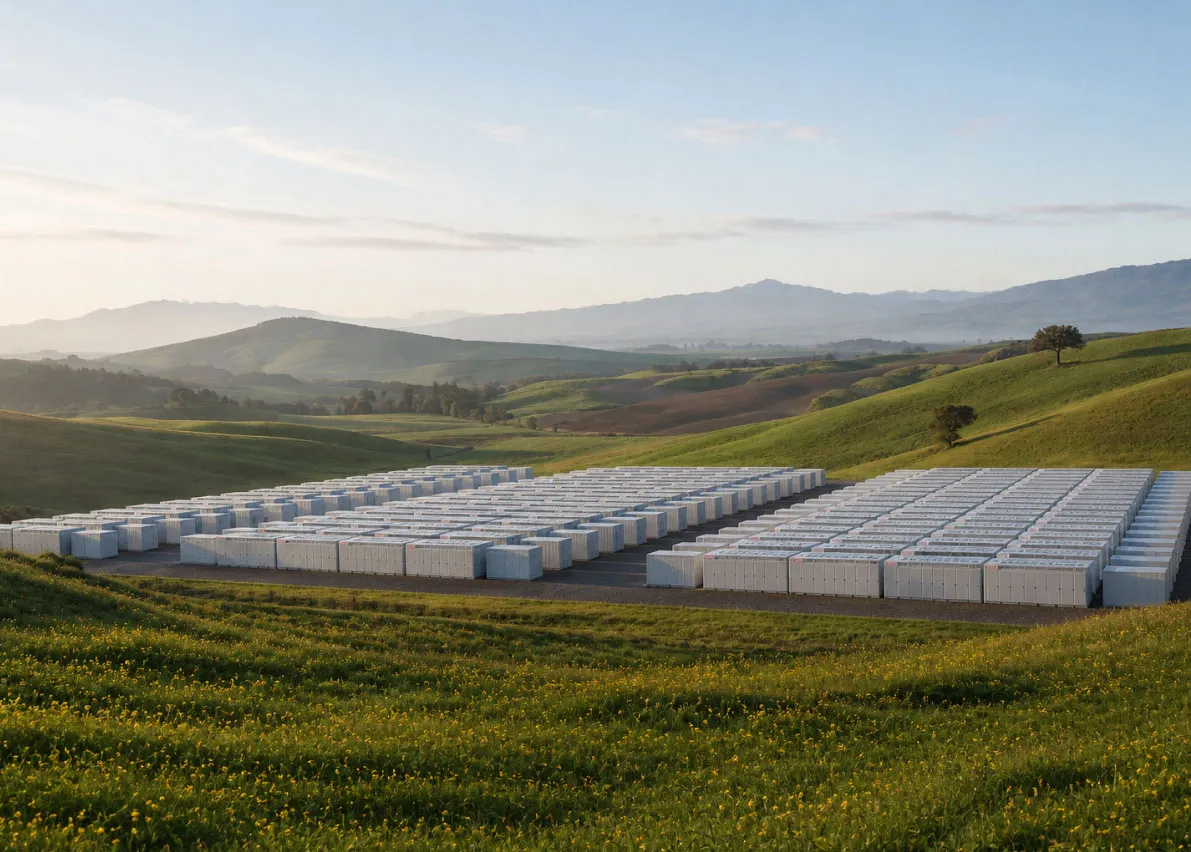
A complete battery energy storage system, from battery to grid connection. CAPAC BESS combines the Eos zinc battery platform with power conversion, grid connection, monitoring and control, integrated, certified and delivered from a single source.
The non-flammable zinc technology keeps the system simple and its performance stable for decades, which makes it a strong basis for bankable projects.
One System, One Responsibility
Battery storage projects are capital-intensive and run for decades. Their success depends on technology, grid connection, operating strategy and revenue model working together from the start. With CAPAC BESS, all of these are planned as one system, with clearly defined responsibilities from project development through construction to operation.
System Architecture
Every CAPAC BESS is configured for its project: power (MW), capacity (MWh), grid requirements and operating strategy. The architecture always follows the same proven logic, from the battery on the DC side to the certified grid connection.
Technical Components
-
Battery Platform
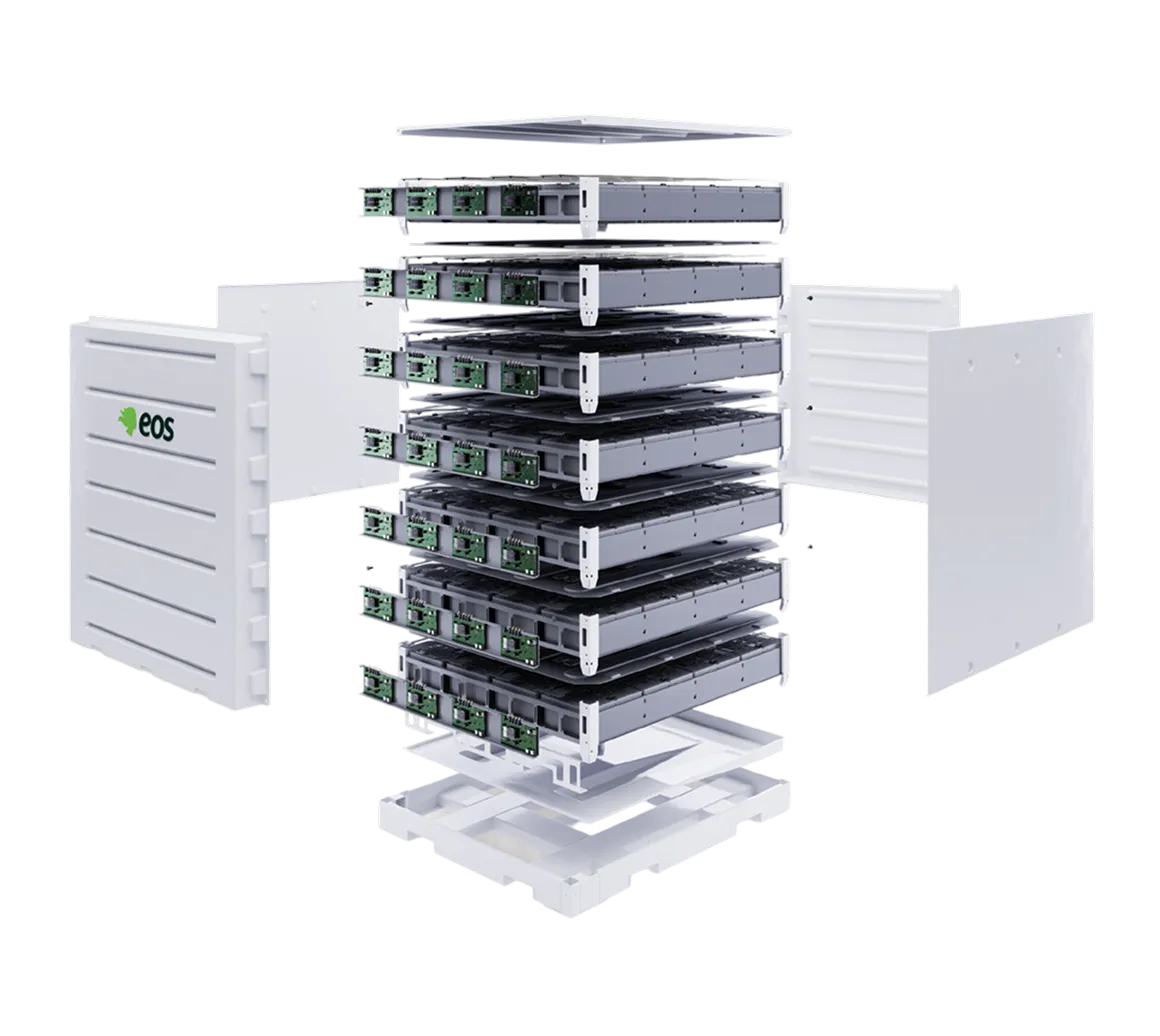
Eos Cube or Eos Indensity, with water-based zinc chemistry
-
Inverter (PCS)
Bidirectional power conversion between DC and AC
-
Transformer
Steps up the voltage to medium- or high-voltage level
-
Substation
Grid connection point with switchgear, protection and metering
-
Grid
Certified connection to the public grid
-
Monitoring & Control
DawnOS, EMS and 24/7 remote operations
Power Conversion & Grid Connection
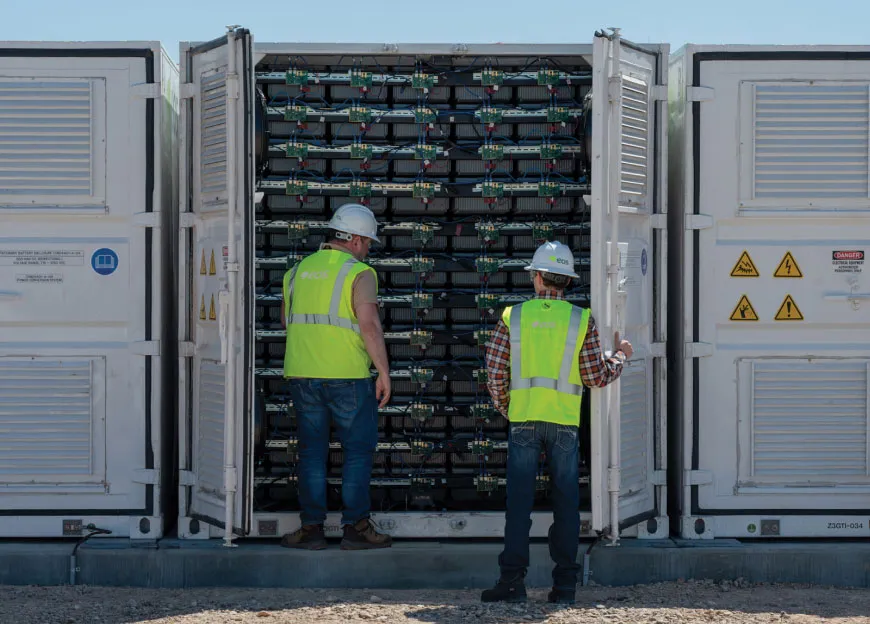
Between the battery and the grid sits the part of a storage plant that decides whether it is allowed to operate at all. Inverters convert direct current from the battery into grid-compliant alternating current and back. Transformers step up the voltage, and the substation connects the plant to the medium- or high-voltage grid. CAPAC integrates these components with proven, grid-compliant power electronics and takes care of certification, so the plant meets the requirements of the grid operator from day one.
-
Grid Integration
- Bidirectional, grid-compliant inverters (PCS)
- Reactive power provision and fault ride-through as required by grid codes
- Transformers and substation for medium- or high-voltage connection
- Unit and system certificates according to German grid codes (VDE-AR-N 4110/4120) and DACH equivalents
- Coordination with grid operators from planning to commissioning
In short
A certified, grid-compliant connection, planned and delivered from a single source.
Performance and Operating Characteristics
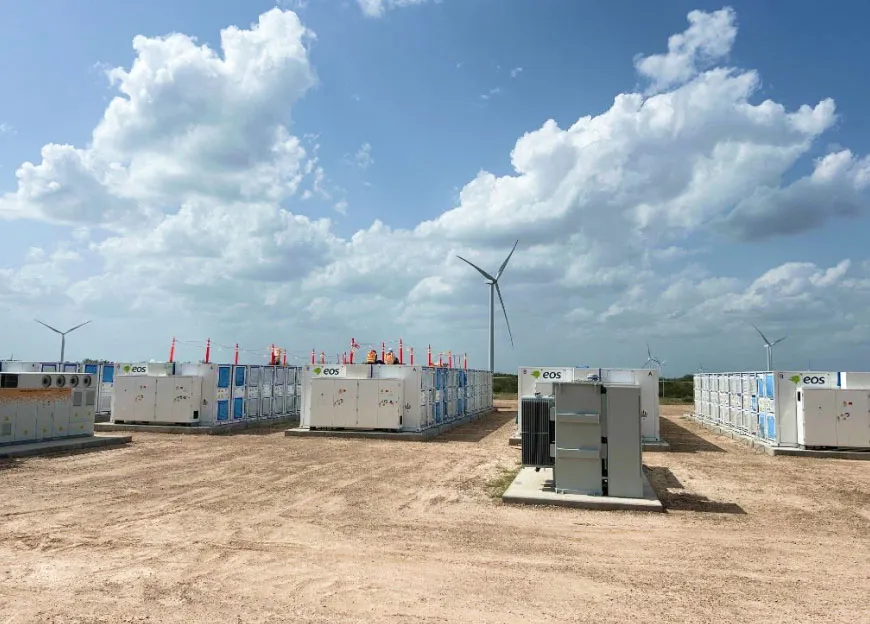
CAPAC BESS is commercially optimised for 4-hour applications, which is the sweet spot for most revenue models in the DACH market today. Where a project needs it, the system can be configured for durations of 16 hours and more. Thanks to the zinc chemistry, performance stays almost constant over the project life: no heating or cooling, no thermal runaway, and minimal capacity loss.
-
Operating Characteristics
- Commercially optimised 4-hour configuration, extendable to 16+ hours
- 96.4 % of rated capacity retained over a 25-year design life
- Operation from −20 °C to +50 °C without heating or cooling
- High availability through module-level battery control
- Suitable for arbitrage, balancing and peak shaving
In short
Performance you can plan with, and cash flows you can model.
Commercial Benefits
Because technology, regulation and operating model are aligned during planning, the economics of a CAPAC BESS can be modelled reliably. That is what investors, banks and insurers need. The zinc technology also removes several cost items that conventional lithium-ion systems carry over their lifetime.
-
Commercially Relevant Factors
- Predictable capex structure
- Lower operating costs: no HVAC investment and no HVAC energy consumption
- No repowering budget thanks to minimal degradation
- Lower fire risk, which simplifies permitting and insurance
- Bankable financial model: cash flow, NPV, IRR and DSCR
In short
Financeable projects with a stable long-term revenue profile.
Lifecycle Services
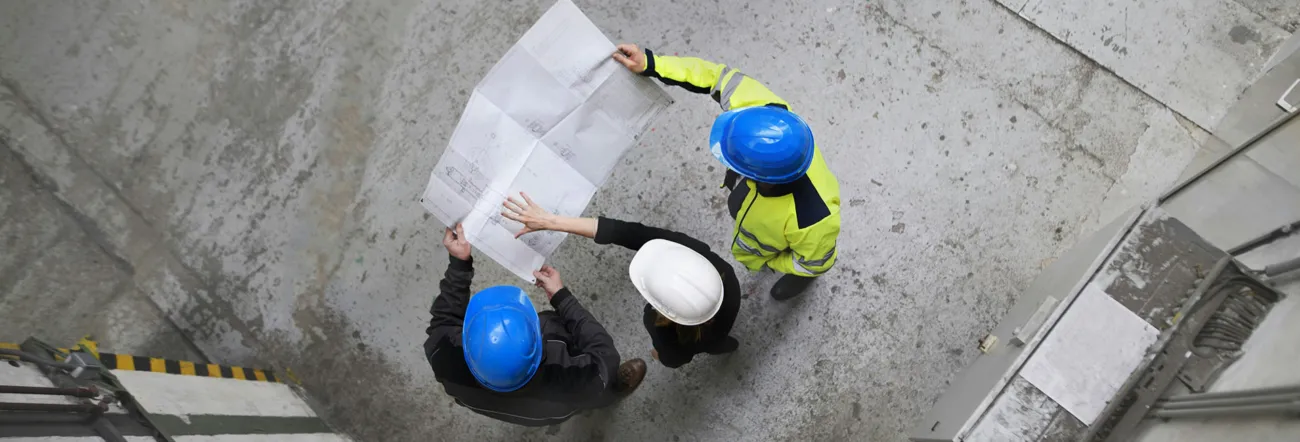
CAPAC BESS is more than hardware. Depending on the agreed scope, we deliver engineering, procurement, construction and commissioning as EPC partner, or coordinate these services as part of the overall integration. Our ten lifecycle services cover every phase of the project. Book individual services or combine them into a turnkey project.
-
Our Services
- Develop: site analysis, permitting, feasibility study, market simulation
- Build: engineering and delivery (EPC), installation, commissioning and certification
- Operate: maintenance, operations management, optimisation, trading and market access
In short
End-to-end responsibility, from the first idea to long-term performance.
Storage-as-a-Service
Not every company wants to invest in its own storage plant. With Storage-as-a-Service, CAPAC builds, integrates and operates the plant, and you use it for a contractually agreed service fee with clearly defined performance parameters. Risks and responsibilities are allocated transparently in the contract. The model suits companies that want to benefit from flexibility without tying up capital.
-
Features
- Full CAPAC BESS architecture
- No upfront investment, no capital tied up
- Predictable service fees with defined SLAs
- Integration, maintenance and operations included
- Transparent performance and availability reporting
In short
A storage plant without upfront investment, with clearly defined performance, SLAs and responsibilities.
Contact Us
Discuss Your Project
Battery storage systems are long-term infrastructure investments. Their success depends on how well technology, system design, safety and economics work together.
In an initial consultation, we clarify:
- Optimal storage duration and sizing
- Technical and regulatory requirements
- Economics and revenue potential
- Suitable project and delivery structure
You get a sound basis for your investment decision and the next steps of your project.
