Products
Eos Indensity
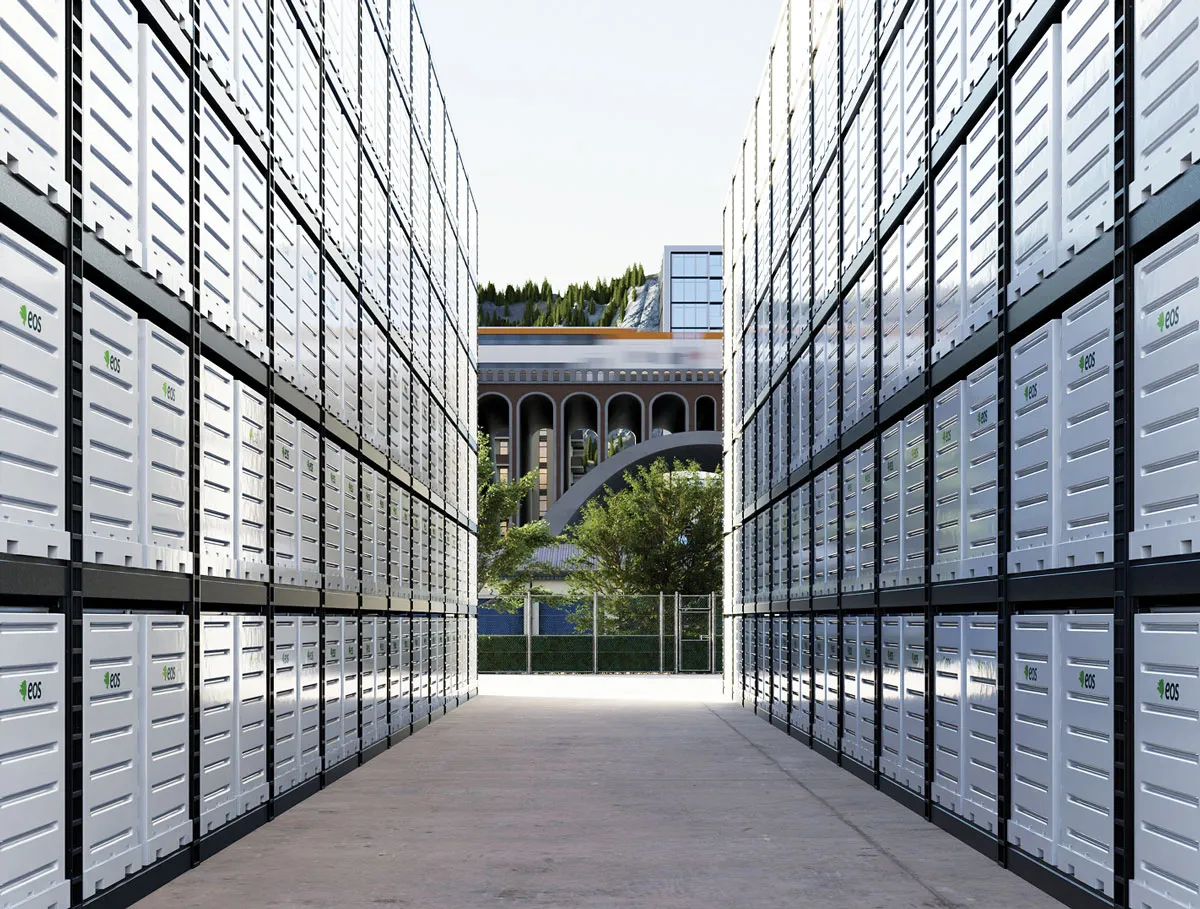
Storage that grows upwards. Eos Indensity stacks battery units in a steel structure and fits far more capacity on the same area, outdoors, behind a screening facade or inside existing buildings. It uses the same water-based zinc technology as the Eos Cube. Its non-flammable chemistry is what makes such dense, indoor-capable installations possible in the first place.
Design Concept
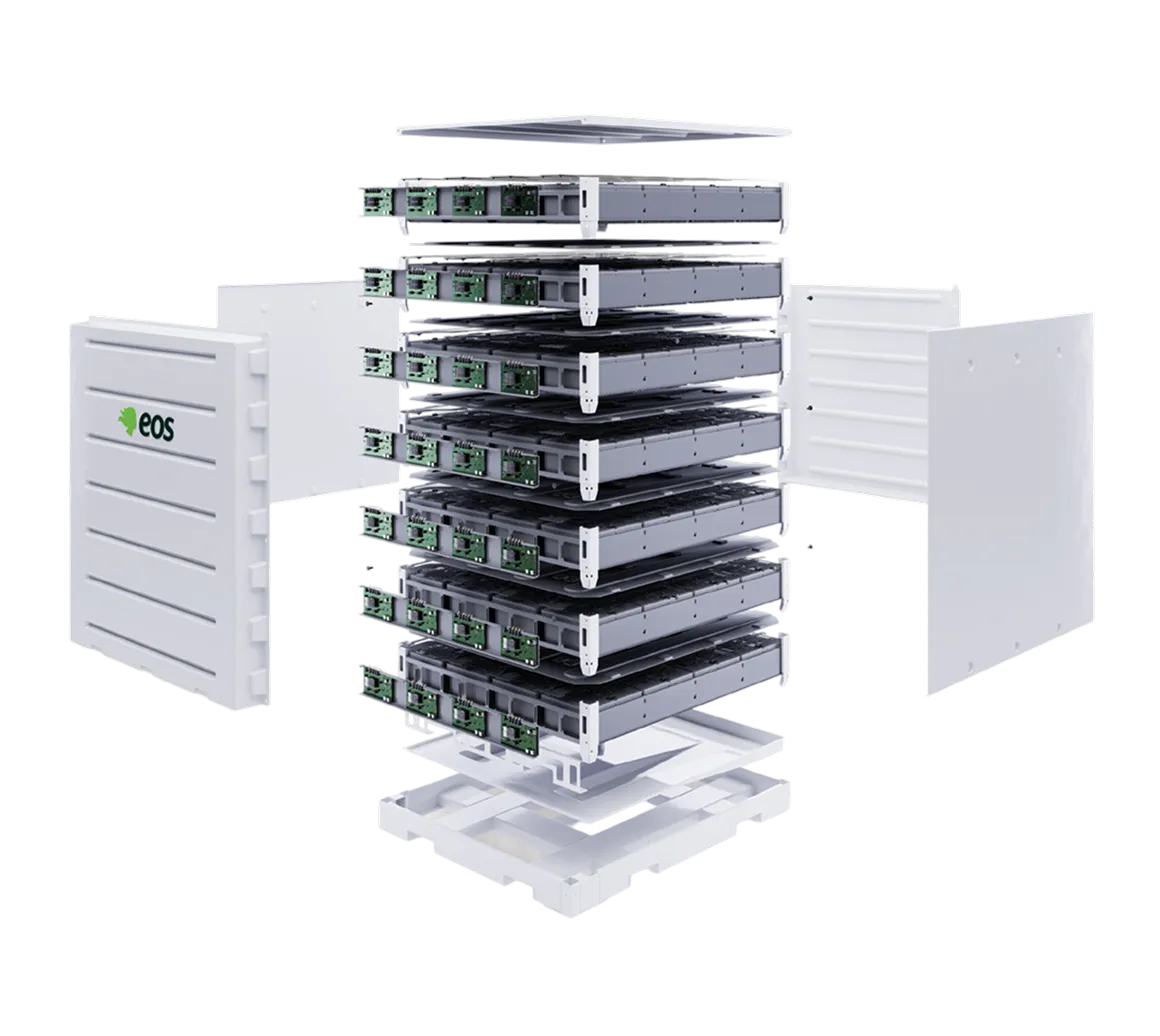
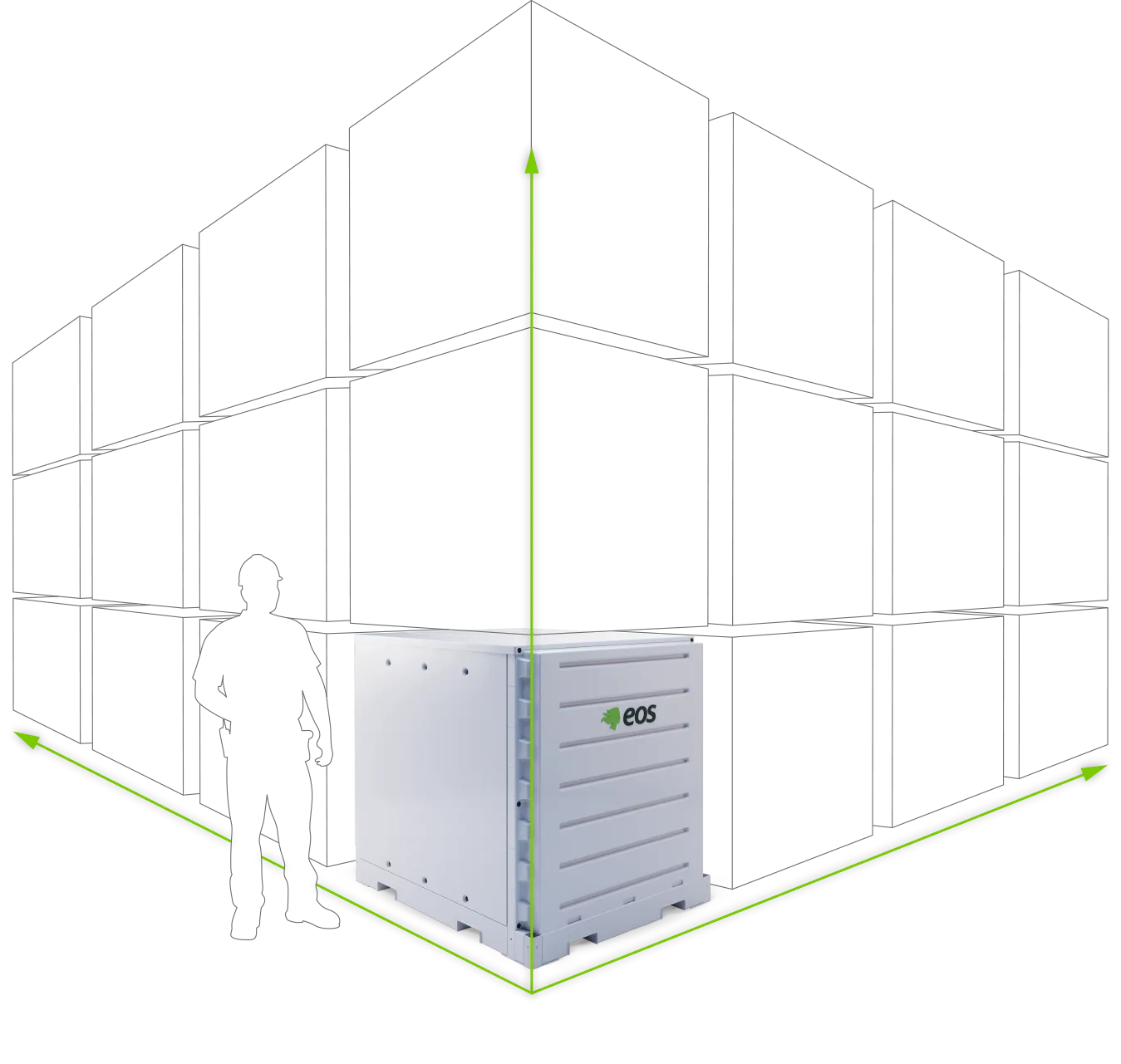
Instead of placing containers side by side, Indensity starts with a simple steel superstructure. Indensity Core units are then inserted, each a self-contained, stackable unit with integrated Eos Z3 modules and battery control. The structure can grow horizontally on open land or vertically where space is tight.
- Rack-based system, not container-based
- Core units arranged horizontally and vertically
- Up to ~4× more capacity per area than conventional storage layouts
- Modular build-up: capacity grows with the number of Core units
In short
Maximum capacity on minimum land.
Zinc technology inside
High density only works if the chemistry is safe. Lithium-ion systems need spacing, cooling and extensive fire protection when packed tightly or placed indoors. The water-based zinc halide electrolyte in Indensity cannot burn and needs no thermal management. Fire protection concepts for dense and indoor installations become considerably simpler as a result.
- Non-flammable: water-based electrolyte, no risk of thermal runaway, even in dense configurations
- No thermal management: operates from −20 °C to +50 °C without heating or cooling, also indoors
- Minimal degradation: 96.4 % of rated capacity retained over a 25-year design life
- Flexible duration: typically configured for 4 hours, extendable to 16+ hours
- Responsible materials: no lithium, cobalt or rare earths, fully recyclable
In short
The chemistry that makes high-density and indoor storage practical.
Commercial Benefits
When land is expensive or scarce, footprint decides whether a project is viable at all. Indensity turns that constraint into an opportunity.
- Lower land costs per MWh
- Projects possible on sites too small for container layouts
- Reuse of existing buildings, grid connections and infrastructure
- Easier approval in urban and industrial areas thanks to non-flammable chemistry
- No HVAC investment and no repowering budget over the project life
In short
Storage projects in places where storage previously didn’t fit.

Role in CAPAC BESS
Indensity is integrated into CAPAC BESS project by project. Steel structure, grid connection, power conversion and controls are planned as one system and delivered from a single source.
- Structural and site planning
- Power conversion system (PCS)
- Grid connection
- Monitoring & control
- Full EPC delivery
In short
The high-density option within CAPAC BESS.
Contact Us
Discuss Your Project
Battery storage systems are long-term infrastructure investments. Their success depends on how well technology, system design, safety and economics work together.
In an initial consultation, we clarify:
- Optimal storage duration and sizing
- Technical and regulatory requirements
- Economics and revenue potential
- Suitable project and delivery structure
You get a sound basis for your investment decision and the next steps of your project.
